Update #12: Airships of Skybourne
over 11 years ago
– Tue, Feb 10, 2015 at 06:19:03 PM
Note: We've gotten a request to make the Spheres of Power PDF available as an add-on, instead of only the print copies. PDFs of both Spheres of Power and Wizard's Academy have been added to the main page for those who want them.
There are 4 days left in the campaign, and we're sitting less than $400 away from unlocking the Hero Lab files! As we come ever closer to the end of this campaign, we turn our attention to the final two stretch goals: A Jim Groves adventure, and the highly-anticipated (by us at least) 4th book, detailing all sorts of expanded airship options.
Both of these stretch goals have us really, really excited: Jim Groves has a long publishing history with Paizo's own adventure lines, and we can't wait to see what he'll bring to help parties beginning their exploration of Andrus. As for the 4th book, it's the kind of thing that now that it's in my head, I really, really want to see it done; I've been talking to our budget person to see if we can lower the stretch goal from $30,000 to $27,500 just to be a little more certain we pass it.
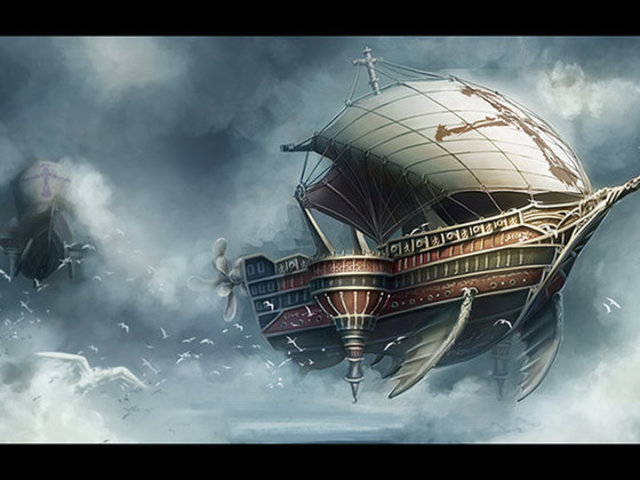
Airships of Skybourne
Airships are the heart and soul of a Skybourne adventurer's career. Sure, an adventurer could simply buy passage on someone else's ship, but it's much more fun (and profitable!) when you have your own ship to call home, and a dedicated crew of adventurers to rely on.
The Player's Guide details all of the basics a crew needs to take to the skies, including but not limited to the following:
Airship Designs: Whether it's a two-person ballon, an alchemical steam-ship, or an enormous behemoth powered by spells and necromancy, this book details a variety of potential ships a crew could employ, upgrading as opportunity (and funds) become available.
Customizable Parts: Players can switch out the engine, add plating and weapons, or add magical capabilities to a ship as they desire, customizing their ship to be whatever it is they want it to be. The Player's Guide includes a variety of options, rules, and guidelines for making a ship your own and upgrading it to fit your needs, whether it's fitting your ship for a traverse across the planes or turning a simple Zeppelin into an indestructible gun-boat.
Like a person, each ship has a number of slots, which include armor, mast, engine, weapons, and other pieces which can themselves be outfitted with better parts or magic items. The bigger the ship, the more slots it has. In a game that relies particularly hard on airship options, the party may even decide to spend most of their wealth on outfitting their ship, creating a vehicle that will live on in the stories told at adventurer's halls the world over.
Crew Roles: Pilot, repairman, gunner, chef; the list of crew a ship needs to function is expansive, and grows ever larger as the ship gets bigger.
A PC can simply hire people to do the jobs for him, but it can be much more fun when he's in it himself, working the fiddly-bits both magical and mundane to keep his ship sailing the skies. While not every role is needed to pilot a ship, PCs can get bonuses and increased options by filling each of a ship's potential rolls or hiring crew to do it for them. Each of these jobs is tied to a skill (usually Profession), allowing players to do any of them with a minimum of investment.
While not an exhaustive list, the Player's Guide outlines each of the following:
-
Pilot (Profession [sailor]): Usually but not always the Captain, the pilot's job is to control the ship in combat and in the world, taking the ship where it needs to do and keeping it out of danger.
-
Quartermaster (Profession [soldier]): The quartermaster is in charge of maintaining discipline among the crew, and can provide a variety of bonuses for his men when performing raids and other actions depending on how well he's done his job.
-
Chef (Profession [Chef]): If the food is good enough, the grunts will stop complaining about the incoming fire. (courtesy of Howard Tayler's Schlock Mercenary)
-
Boatswain (Profession [Carpentry]): The Boatswain is responsible for keeping a ship repaired and running, fixing battle damage and making sure everything runs properly.
-
Cabin Boy (Profession [Servant]): The cabin boy needn't be a youth, but could be a professional valet or indeed anyone with the training to accomplish the hundreds of mundane jobs that help make sure a ship runs smoothly.
-
Ship Master (Profession [Navigator]): The ship master is responsible for keeping the ship on course for difficult and long journeys. While a good ship captain can make simple journeys on his own, the best ships and the longest voyages do better when they have a dedicated ship master to show them the way.
-
Gunner (Profession [Siege Engineer]): Whether controlling a ship's weapons directly, or as the Master Gunner overseeing the various crews, someone's got to fire the big guns and it may as well be you.
-
Surgeon (Heal): Not every injury requires magic, and with especially large crews even a powerful Cleric may find himself outnumbered by the sheer number people who have need of his services. A dedicated surgeon can help a crew stay safe, happy, and healthy no matter what's befallen them, and can keep a crew alive even when the chips are down and everyone's in danger.
-
Entertainer (Perform [any]): Every crew needs entertainment, and a good entertainer can provide quite a few bonuses for members of his audience.
Overland Round: Too often, the fun of running a ship is lost as a crew does its best to speed from point A to point B. While any crew can certainly bypass the process of exploration, the Player's Guide outlines a system to make this part of an adventure not only meaningful, but fun.
The "Overland Round" is a concept that has been played with before, and is similar to a Kingdom turn when ruling a nation. Here, a party's activities while sailing or exploring are divided into segments, allowing a crew to easily decide what they will do with their time (whether it be providing bonuses to the crew, crafting magical items, or any number of things), allowing them to make the most of time spent looking for their next big haul. Rules are also provided for GMs when determining random encounters, events, and other things that can befall a sailing crew, making each day a possible adventure unto itself.
Combat: Taking a ship into combat can be a dangerous affair, but adventuring is all about danger, and whether it's wyvern-riding bandits or a pirate airship, eventually the crew will find something they will need their ship to escape or destroy. The Player's Guide covers rules for taking ships into combat, and many of the different options a PC can take to participate in a fight beyond simply piloting or gunning.
Ships of Skybourne
While the above list of airship options provided in the Player's Guide is expansive, it is by no means exhaustive of what options are available to an airship crew (after all, we need room in that book for all those other pesky player needs such as races, classes, and adventuring equipment). In "Ships of Skybourne", though, we have no such limitation; we can fill the whole book with nothing but airship options and other bits to make your time in the air as great as possible.
Along with a lot of pages of expanded options (more airship designs, more airship magic items, and more airship crew roles) the book also covers the following:
Expanded Options: More airship designs! More magic items! More crew roles! With little in the way of space requirements, we've allowed our imaginations to run rampant with this book, including Druidic airships built on the backs of giant flying animals, clerical airships fueled by the power of prayer, and more!
Expanded Combat: Along with the combat roles provided in the Player's Guide, we'll be expanding the concept of ship-based combats in Ships of Skybourne, including all sorts of things a crew could do to aid a ship beyond the norm. Want to provide bonuses through bardic performance? Want to send out an animal companion, a micro-ship, or a winged party member to deal direct damage to a ship or scout out its weaknesses? We've even talked to David Silver (who's previous supplements have included griffon and pegasus player races options) about adding a few new playable flying beast races of our own to the book, perfect for games that want to make the most out of air and ship-based combats and add a focused fighter jet-style character to their games.
Design Your Own Ship: Whether the GM wants a design not included or the players want to built it themselves, Ships of Skybourne includes rules for designing a ship from the ground up, not just customizing a ship's options, but deciding what options it will have in the first place. Between the customization presented in the Player's Guide and the design options presented in Ships of Skybourne, we're trying to make sure that anything and everything a player could want is available for them to have, letting them make a ship truly their own.
Thank you again to everyone who's joined us on this journey; let's make this an excellent end to the campaign!
A Few Points
over 11 years ago
– Thu, Feb 05, 2015 at 12:38:36 PM
There's a few points of information that we wanted to pass along for any interested parties:
Talk to Us
We posted a link to Skybourne on Reddit. If there's anything about the project you'd like to ask us, we'll be hanging out in the comments section all day so come and let us know!
Clarification of Add-On
Any backer who gets Spheres of Power or Wizard's Academy as an add-on will also get a PDF of that book.
Reward Tiers
Legend Reward Tier: Backers at the $200 level (the ones getting the special event at Gen Con), get everything; this was not expressly mentioned before, but they do not need to increase their pledge for the map.
Council Reward Tier: The Council level has changed; what was originally 5 copies of everything and $1,000 is now 1 copy of everything and $400.
New Add-On
Character Add-On: In our Spheres of Power kickstarter, we had 3 reward levels that allowed someone direct input into the creation of that book; a level for designing a piece of artwork, a level for designing an NPC to be both stat'ed and included in the prose, and a level for helping to design one of the book's new classes. For Skybourne, however, we only included one of those levels: Designing a piece of artwork. We do have a level that will allow the backer to create a character to become part of the Skybourne mythos (the $200 legend level), but that level is part of a bigger package that involves a private game at Gen Con.
It turns out there are backers who, for one reason or another, can't take the Legend level but are still very interested in the idea of adding a character to the Skybourne mythos, so we've decided to make the option available. As a new $40 add-on, you can design an NPC to be stated out and included in one of the skybourne volumes (which one depends on the character), and will become part of the Skybourne universe, appearing in future stories and products as appropriate.
Thank you all so much for your help with this project. It's because of backers spreading the word that we've managed to make it this far. Let's keep going and smash some more stretch goals!
Adam
Update #10: Woodfaring Adventures
over 11 years ago
– Sat, Jan 31, 2015 at 07:33:49 PM
It’s been awhile since our last update (family needs have been taking up the time I would normally use to write one), but we want to announce that earlier this week we broke $15,000, upgrading all books to full-color!
As the campaign rolls in on its last few weeks, we’re now turning our attention to Hero Lab files, a Jim Groves adventure, and the goal we’re most excited about, a completely new 4th book, detailing air combat, airship customization, and other options for making a life in the skies as great as it can be.
We’ll have more information on that 4th book as we get closer to unlocking it, but right now it’s about time we told you a bit more about the 3rd book in this series: Woodfaring Adventures.
Woodfaring Adventures
Skybourne can support any number of adventure types: city adventures in Andrus or the floating isles, tales of airship piracy and wyvern-riding bandits, military campaigns that traverse the planes, and a host of others limited only by the GM’s imagination. There is, however, one form of adventure that is particularly suited to Skybourne, so much so that we’re creating an entire book dedicated to it: delving ruins and exploring the wilderness.
In Skybourne, adventurers are their own economy; more than simple sell-swords or opportunists, these adventurers earn their living by braving the forest floor and returning with ancient artifacts, rare components, and forgotten valuables. Cities such as Andrus and others have entire markets dedicated to selling what adventurers need and buying what they find on their excursions, and some outposts have grown up completely around buying and selling to forest delvers.
While the Player's Guide details the rules by which these adventurers work and Andrus gives a city that services them, it's in Woodfaring Adventures that we covers everything a GM needs to run their forest-delving adventures, be it a campaign of sandbox exploration, a single excursion in search of a powerful artifact, or a set of unique terrain and monster information to re-purpose for their own worlds.
Adventure Aids
Woodfaring Adventures is principally a GM's book, and includes encounter tables, sample maps, random events, challenge descriptions, monster descriptions, descriptions of ruins, and everything else a GM needs to challenge and reward PCs brave enough to venture through the forest.
Along with rules and examples, Woodfaring Adventures also includes guidelines for developing unique adventures, allowing a GM to use and re-use this book for a wide spectrum of games.
Terrains
Exploring the forest isn't about packing food and making a few survival checks.
Every adventurer knows the dangers of the forest; whether it be harsh terrain, terrible monsters, or any number of other hazards, exploring the forest is an incredibly dangerous job and is not for the faint of heart. Among the content included in Woodfaring Adventures is detailed information on the different terrain types adventurers must travers and the dangers that may be encountered there.
Among those included:
The Canopy: The sheer size of the forest allows many creatures (even some humanoids) to take up residence permanently in the forest canopy. A dangerous place, certainly, but the canopy is also the last bastion of safety a forest delver finds before reaching the forest floor, and is home to many Chaotic tribes and peoples who’ve made peace with the forest and taken up residence in the relative safety of the canopy.
The Forest Floor: A thousand feet or more below the canopy stretches the forest floor; a dangerous location filled with monsters, dinosaurs, and other components of a vicious ecosystem for which adventurers are just another form of prey. Few things are as dangerous as exploring the forest floor, but it is here that adventurers find the ruins of fallen civilization, ready and waiting to be explored.
Swamps, Jungles, Savanna, Deserts, and more: The world was filled with different climates and terrain types before the forest grew, and the forest adapted to each as it consumed its way around the globe. Swamps, jungles, and more can still be found around the world, but each one has grown larger, darker, and more dangerous. Woodfaring Adventures details each of these terrains and shows how the forest adapted to them, as well as provides information on the frozen north, the wastelands, and other harsh terrain where not even the forest could grow.
The Cryptwoods: There are locations on the planet connected to great magic power: areas particularly strong in necromancy or other forms of magic, where creatures of unnatural power dwelt. When the forest came it consumed these places and, feeding off of the magical energy that existed there, transformed into something new and horrifying. The cryptwoods are places of supernatural power, where the already dangerous nature of the forest has become something greater, and where the normal rules of life do not apply. It is here that the dead walk with no intervention from clerics or wizards, where the courts of chaotic spirits and divine beings are found, and where the dreaded Kaiju are born. No sane adventurer would want to delve the cryptwoods, and yet delve them they do, for the cryptwoods grow around sources of power, and near the center of each is often found a temple, an artifact, or something else of great value waiting for someone strong enough to take it.
Monsters
There are many creatures that owe their existence to the forest; monsters, dinosaurs, kaiju and more. Many of these creatures already exist in Paizo's bestiaries, but some are new, and included in this book. Some examples of these new monsters are included below:
The Corrupted: This template combines with any other creature type to represent those who have been taken, consumed, and converted by the forest into something new. Seed carriers and shock troops, some feel it is through the corrupted that the forest exerts its will, spreading itself wherever it hasn't already reached, and turning its enemy's power against them.
The Cherufe: Even if they didn't win the poll to become a playable race, I like the image of the Cherufe far too much to leave them behind completely. These dinosaur-men will be joining Skybourne in Woodfaring Adventures as a powerful new race exerting their dominance over the new world through sheer force of arms.
The Kaiju: First detailed in Pathfinder's Bestiary 4, Woodfaring Adventures will include several more of these greatest of monsters. While not necessarily agents of the forest, these beasts have been known to fell entire armies that attempted to enter their domain, and have enforced the expansion of the forest on any who dared threaten the will of the world.
Thank You
Once again, thank you to everyone who's helped us reach this point. It's because of your pledges and you spreading the word that we've made it this far. Let's go unlock Hero Lab!
Update #9 Gods and Alignment
over 11 years ago
– Sat, Jan 24, 2015 at 06:20:43 PM
We are currently sitting less than $500 away from unlocking full color interiors for all books, and we couldn’t be happier! Thanks to all of you for making this possible, it means a lot to us.
A backer asked us about how deity worked in the world if Skybourne and, since the answer is a bit complicated, we thought we’d answer it here for anyone else who'd like to know. In Skybourne, we’ve made a few small but significant changes to the way alignment works and, by extension, the way clerics and deity work as well.
Alignment
In Skybourne, alignment does not mean personality: a good man may lie, an evil man may be merciful, a lawful man may carouse, and a chaotic man may go willingly to judgement for his crimes. True, a man’s alignment does influence his personality through their tendency toward good, evil, lawful, and chaotic acts, but ultimately a character’s personality is determined by the player.
Instead, alignment in Skybourne is much better thought of as allegiance.
Good and Evil: A History of Gods and Demons
In Skybourne, there are two primary overdeities: the Allgod and the Ungod. The Allgod is tied to positive energy and is the source of life, good, and healing. The Ungod, on the other hand, is tied to negative energy and is the source of death, unlife, and evil. All clerics who channel positive or negative energy are channeling the power of the Allgod or the Ungod, although neither being will grant spells to clerics.
It is from the Allgod and the Ungod that the gods themselves derive their power and many of the forces of creation were birthed.
Good Alignment
There are two types of divine beings that serve the Allgod: gods and saints. Gods are beings created directly by the Allgod, while saints are the souls of mortal beings that became greater than the angels. It must be noted that the distinction between a god and a saint is not one of power, only of origin; many gods have few worshippers and little power, while some saints have widespread devotees and are the most powerful being in the pantheon. These beings are autonomous with their own beliefs, desires, and agendas and may war among themselves both physically and ideologically, their only connecting force being their allegiance to the good alignment and by extension to the Allgod.
Evil Alignment
Similarly to the gods and saints described above, the Ungod is served by dark gods and demon lords (while the beings created by the Ungod are also called ‘gods’, they are often distinguished by the title ‘dark’ to separate them from their ideological counterparts). Dark gods are created directly by the Ungod, while demon lords are the souls of particularly powerful and corrupt mortals that won their position in hell and the pantheon through force of arm, deal-making, or sheer cunning or power. The inter-conflicts between the demons and dark gods are much more pronounced than those of the Good-aligned, as their nature and lust for power drives many dark gods and demon lords to constant treachery in service to their own personal agendas.
Neutral Alignment
Along with the devotees of good and evil among the divine are many creatures who owe allegiance to neither. These beings are known as Primordials, and either exist independent to the Allgod and Ungod, or were created through the interaction of these two beings with each other. These include the elemental gods, the King and Queen of Faerie, and a host of other beings scattered throughout the planes and demi-planes. There also exist a series of Fey Lords; divine beings who, like the saints and demon lords were not birthed the same as the gods and primordials, but who nonetheless possess divine power. The Fey Lords form a nobility of the scattered planes, and while most Fey Lords were birthed by divine parents, there does exist some individuals who have attained this rank through their own actions.
Alignment: Good, Evil, and Neutral
An alignment of good or evil in the world of Skybourne has less to do with one’s disposition (although one’s disposition will certainly lead them to good or evil acts) and more to do with the state of one’s soul in light of this great cosmic struggle. Most civilized humanoids in the world are neutral, caring little for cosmic struggles they feel don’t concern them, and being perfectly willing to pay tithes to either the hierophant or the lich king if it gets the tax collectors off their back. Good creatures, on the other hand, have a personal stake in the cause of righteousness; they needn’t be crusaders, but still they must, through allegiance or action, have aligned their soul with the interests of the good-aligned gods. LIkewise, petty crimes will not earn a creature an evil alignment. To become evil, a creature must dedicate themselves actively to the dark gods or else have tainted their spirit so thoroughly through their actions that Hell can claim ownership of their soul.
A creature with a temper and a tendency toward violence can be Good if they try every day to keep themselves on a righteous path, and a caring, merciful person could be Evil if they have descended to the depths of depravity, no matter how good their initial intentions.
Lawful and Chaotic: Civilization and the Forest
It is true that there are extraplanar beings aligned with the concepts of Law and Chaos, but such beings rarely take an interest in the souls of men. For many, the struggle between Law and Chaos is less about divine beings, and more about the actual war being waged all around them for control of the destiny of the world.
Chaotic Alignment
For some, the loss of the old world was a sad but necessary step in the progression of the world. The old way of life was not only stagnant, but damaging; when the forest grew, it was the will of the world made physical, cleansing its surface of industry, pollution, and all those arrogant enough to think themselves masters of creation. These beings make peace with the forest rather than seeking to tame it and live in tribes alongside the natural denizens of the forest.
Lawful Alignment
For others, the destruction of the old world was one of the greatest calamities in history. The march of history was one of lesser to greater as rivers were tamed, technologies were crafted, and cities built. The loss of thousands of years of civilization and progress can never be recovered, but the few bastions of civilization left can be defended as the followers of Law wage war against the forest. These beings seek to conquer the world, taming the forest just as an an animal trainer would tame a dangerous animal. In this conflict, paladins and monks feature prominently, as paladins are charged with holding the light of civilization high and defending it against all opposition, and monks train in monasteries that double as libraries and fortresses, built to defend what knowledge of the old world remains.
Neutral Alignment
While the transformation of the world affected all creatures, there are some for whom the shift was less pronounced. Most prominent among these are the kingdoms of the merfolk, where life underwater already necessitated a much more harmonious existence with nature than was possible on the surface. While the transformation of the world did birth leviathans and other great sea creatures, for the most part the kingdoms of the merfolk remain intact, and the merfolk have found themselves often serving as mediaries and traders for the scattered surface dwellers.
Alignment: Lawful, Chaotic, and Neutral
Just as with Good and Evil, most humanoids tend toward neutrality in the Lawful/Chaotic divide, although not as prominently. The forest tribes are almost always chaotic, while the denizens of the floating isles are often lawful, but most of the refugees scattered around the world are too busy defending themselves and scratching out a living to care for the larger concerns of civilization. Likewise, a creature needn’t be pledged to either defend or destroy civilization in order to gain a lawful or chaotic alignment. That being said, the forces of Law and Chaos are indeed at odds, doing battle just as often as their Good and Evil counterparts for control of the world and its future.
A chaotic creature is not crazy; indeed, he may even be noble, serious, and respectful of authority, but he might also be a crusader against those seeking to civilize the forest. Likewise, a crime boss may not respect the law of the land, and yet could be a profound Lawful defender of civilization, particularly as his profession couldn’t exist without cities in which to ply his trade. Clerics may also specialize in either Law or Chaos through their selection of domains, entering themselves into their own ideological battle just as poignant as the battle between good and evil, except this time their opponents might just be other members of their patron's pantheon.
Questions
Today’s post was prompted by a backer question: it’s the kind of thing we love, as it lets us know what you want to hear from us. As such, we'd love to hear more from you as to what you'd like to know about our books or the world of Skybourne.
What about the setting would you like to know? What excites you the most, and what do you want to hear more about?
Thanks,
Adam
Stretch Goal #3 Unlocked, and Kicking it Forward!
over 11 years ago
– Wed, Jan 21, 2015 at 03:11:26 PM
We've crossed the $12,500 line, adding airship customization and expanded options to the Player's Guide! A big thank-you to everyone who's helped us make it this far; we appreciate your help in making this project the best it can be.
Worthy Kickstarters
In the spirit of kicking it forward, there are a few more kickstarters we wanted to let you know about:
Epic Hero and Villain Feat Cards: This system is designed to lay on top of any system to give players and Gms a means of altering the flow of the story and make the game more interesting. I can't vouch for the system itself since I've never used it, but I love looking into game aids like this to see how they can give a new spin to the gaming table.
Shadows of Esteren - A Medieval Horror RPG: Occultism: I had the pleasure of attending the Ennie awards two years ago, when Shadows of Esteren arrived on the scene winning two gold awards and the silver award for best product of the year. Now Shadows of Esteren is back with another kickstarter to expand their game with a new book and orchestral album. If horror-fantasy and good music appeal to you, this game is definitely worth checking out.
WILDERNESS ADVENTURES 28mm Scale Fantasy Gaming Terrain: Fat Dragon Games is famous for their printable terrain; print, cut, fold, and you have extremely professional tabletop aids that weigh nothing and can easily be expanded or replaced. They're a good company, and now they're kickstarting a new set of wilderness-themed terrain! I doubt their trees will be quite as giant as those in the Skybourne world, but nonetheless it's an amazing opportunity to get a terrain pack that just might come in handy when using our own Woodfaring Adventures.